
A Practical Roundup of Couch Co-Op Games That Actually Work
By Wendell Al-Hassan · · 9 min read
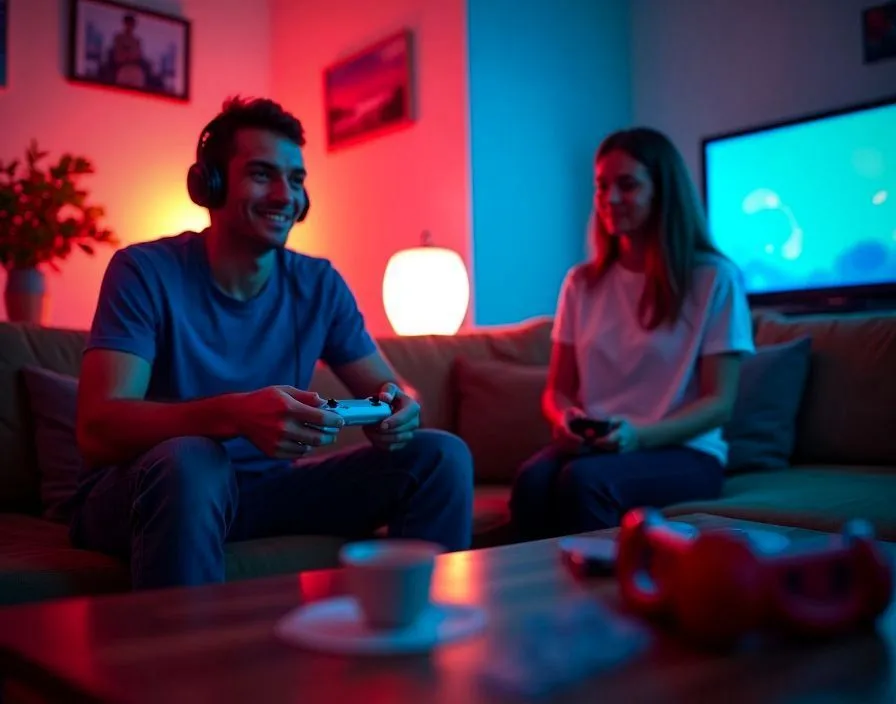
Picking a game for a shared evening is harder than picking a solo time sink. You need something that boots fast, respects different skill levels, and doesn’t turn setup into a tech chore. This roundup focuses on couch co-op games that are easy to start and satisfying to finish—organized by vibe, with platform notes and friction-saving tips so you can get to the fun now instead of tweaking menus for 40 minutes.
Quick picks when you’ve got five minutes to decide
Relaxed, low-stress hang
- Stardew Valley (Switch/PS/Xbox/PC): Split-screen farm life that starts slow and stays cozy. Great for conversation gaming.
- Minecraft (PS/Xbox/Switch): Console split-screen is straightforward; pick Creative for chill builds or Survival for gentle goals.
- LEGO Star Wars: The Skywalker Saga (All consoles/PC): Drop-in 2-player with simple combat and constant visual rewards.
Two-player “we’re in this together” campaign
- It Takes Two (All consoles/PC): Built for two, full stop. Varied mechanics keep both players engaged without huge skill gaps.
- A Way Out (All consoles/PC): Shorter, cinematic co-op with constant split-screen. Great one-weekend run.
- Baldur’s Gate 3 (PS5/PC/Xbox Series X): Robust 2-player splitscreen RPG with genuine choices. Expect a long haul.
Party-night chaos
- Overcooked! All You Can Eat (All consoles/PC): The definitive kitchen chaos package; crank Assist Mode for mixed-skill groups.
- Moving Out 2 (All consoles/PC): Funnier, gentler physics chaos than Overcooked; still plenty of shouting (the good kind).
- Lovers in a Dangerous Spacetime (All consoles/PC): Up to four players juggling ship stations; communication wins.
Pick-up brawlers that always hit
- Teenage Mutant Ninja Turtles: Shredder’s Revenge (All consoles/PC): Up to six local players; breezy, nostalgic, and snackable.
- Streets of Rage 4 (All consoles/PC): Sharp combat, big style; up to four local players where supported.
- Castle Crashers Remastered (All consoles/PC): Still a crowd-pleaser with simple progression and four-player mayhem.
Tough-but-fair two-player skill tests
- Cuphead (All consoles/PC): Gorgeous, demanding boss runs; co-op eases pressure but keeps stakes high.
- Spelunky 2 (All consoles/PC): Chaotic platforming with friendly fire; set house rules to keep peace.
- Nidhogg 2 (All consoles/PC): Not strictly co-op, but perfect as a 1v1 skill duel between co-op sessions.
The dependable couch co-op games
These staples keep landing on “what should we play” because they solve real living-room problems: fast onboarding, shared progression, and replayable loops.
- Diablo III: Eternal Collection (PS/Xbox/Switch): Four-player local with smart loot and flexible difficulties. Perfect for mixed-skill groups; crank Torment for veterans or keep it breezy on Normal. Offline-friendly on Switch.
- Diablo IV (PS/Xbox): Two-player local on console only. Weightier builds, seasons if you want them, and snappy rifts when time is tight. Note: no couch co-op on PC.
- Rocket League (All consoles/PC): Up to four-player split-screen. Five-minute matches make it the king of “one more.” Turn on bot difficulty and arenas you like.
- Mario Kart 8 Deluxe (Switch): The gold standard of “make everyone smile” design. 4-player local, assists for newcomers, and endless replay value via cups and Battle Mode.
- Super Mario 3D World + Bowser’s Fury (Switch): Four-player co-op in 3D spaces, with camera that mostly behaves. Great for families who want platforming without frustration.
- Halo: The Master Chief Collection (Xbox/PC via split-screen on Xbox): Split-screen campaign across classic games (varies by title). Great if you want something cooperative with a story arc.
- Borderlands 3 (PS/Xbox/PC): Loot-shooter with splitscreen; 2-player on last-gen, 4-player on PS5/Series X. Turn on “Loot Instancing” so nobody steals drops by accident.
- Rayman Legends (All consoles/PC): Four-player platforming with musical levels that never get old. Perfect for quick sessions.
Smart picks for two-player campaigns with staying power
- Divinity: Original Sin 2 – Definitive Edition (PS/Xbox/PC): True split-screen RPG with deep systems. Expect lots of talk and tactical combat; ideal for a consistent duo.
- Baldur’s Gate 3 (PS5/PC/Xbox Series X): Big decisions, bigger consequences. Local split-screen is stable on PS5 and Series X; avoid Series S for split-screen. Tweaks for text size help on living-room setups.
- Outward (PS/Xbox/PC): Two-player split-screen survival-RPG with no hand-holding. If you want a “we actually lived this journey” feel, few games do it better.
Family-friendly couch picks that won’t melt down the room
- Kirby and the Forgotten Land (Switch): Simple second-player role and forgiving platforming. Cooperative without constant time pressure.
- New Super Mario Bros. U Deluxe (Switch): 2D platforming for up to four. Activate Nabbit or Toadette for newcomers to stay involved.
- Minecraft Dungeons (All consoles/PC): Diablo-lite simplicity with colorful gear and quick levels. Great for 2-4 players when Diablo itself is a bit much.
- Animal Crossing: New Horizons (Switch): Local co-play is limited by a “leader” system; still, decorating and fishing together can be a gentle Sunday activity if you accept the tethering.
Party-night co-op that scales up without scaring newcomers
- Overcooked! All You Can Eat (All consoles/PC): Includes the first two games plus accessibility options like slower timers. If Overcooked 2 stressed your friends, this version’s assists help.
- Moving Out 2 (All consoles/PC): Emphasizes silliness over precision; better for mixed skills. Plenty of “we pulled it off at 0:01” moments.
- Keep Talking and Nobody Explodes (All consoles/PC/mobile/VR): One player handles the bomb, others read a manual. Perfect icebreaker with asymmetric roles.
- Heave Ho (Switch/PC): Physics swinging where holding hands is the mechanic—literally. Easy to understand, hilarious to fail at.
- Lovers in a Dangerous Spacetime (All consoles/PC): Clear jobs, adorable chaos. Communication carries the day, not twitch reflexes.
Under-the-radar gems you might have missed
- Unrailed! (All consoles/PC): Build train tracks ahead of a constantly moving locomotive. Short, energetic runs; perfect for “just 20 minutes.”
- KeyWe (All consoles/PC): Two kiwi birds sorting mail with timed puzzles. Communication game in disguise; low-stress co-op.
- PHOGS! (All consoles/PC): One dog, two heads, one stretchy body. Charming puzzles designed for gentle coordination.
- Children of Morta (All consoles/PC): 2-player action-roguelike with a narrative backbone. Great when you want combat plus story between runs.
- Wizard of Legend (All consoles/PC): Fast, responsive spell-slinging; 2-player local with clean progression.
- TowerFall Ascension (All consoles/PC): The Quest co-op mode is a hidden treat; short stages with just enough friction.
Platform notes that matter for couch co-op games
Switch
- Pros: Easiest local setup, Joy-Con sharing in a pinch, tons of friendly platformers and party titles.
- Watch for: Tiny text in some ports; pair a Pro Controller when precision matters. Some games expect per-user save files.
PlayStation (PS4/PS5)
- Pros: Lots of split-screen support, especially for big co-op names (It Takes Two, Diablo, Borderlands, BG3 on PS5).
- Watch for: Local co-op sometimes requires a second PSN profile signed in. PS Plus is not needed for local play, only for online.
Xbox (One/Series)
- Pros: Back-compat helps legacy split-screen favorites; Game Pass is a goldmine for trying several co-op titles in one night.
- Watch for: As with PlayStation, a second profile often needed for clean save tracking. Some games reserve split-screen upgrades for Series X over Series S.
PC
- Pros: Best performance and mod options; Steam’s Remote Play Together lets friends “local” co-op over the internet.
- Watch for: Native split-screen support is inconsistent; many big games (Diablo IV, Deep Rock Galactic, Monster Hunter) are online-only. Controllers simplify everything—have at least two recognized and mapped before launching.
Session planning: match the game to the night you actually have
- 30–45 minutes, low hassle: Mario Kart 8 Deluxe, Rocket League, TMNT: Shredder’s Revenge, Rayman Legends.
- One focused hour: Overcooked! All You Can Eat with Assist, Moving Out 2, Stardew Valley day or two, Minecraft Dungeons run.
- Two-hour sit: It Takes Two chapter, A Way Out session, Cuphead boss gauntlet, Spelunky 2 world push.
- Ongoing campaign night: Baldur’s Gate 3, Divinity: Original Sin 2, Outward, Borderlands 3 split-screen.
Avoiding friction before you press Start
- Controllers first, menus second: Connect and test every controller in the system UI, not just in-game. Confirm player numbers and button maps there.
- Pre-set assists: If a game offers Assist Mode (Overcooked AYCE), aim assists, or difficulty per-player (Diablo III/IV), pick them before inviting less-experienced players.
- Decide on save ownership: On PS/Xbox, have each player sign in if you want long-term progression tracked correctly. “Guest” accounts are fine for one-off nights.
- Calibrate display: Split-screen shrinks UI. Bump text size and turn on subtitles where available. On Switch, handheld split-screen is usually a bad idea—dock it.
- Disable the nonsense: Turn off motion blur, heavy screen shake, and aggressive camera auto-centering. Everyone will feel better after two hours.
Edition and DLC pitfalls that trip people up
- Overcooked! vs. All You Can Eat: The AYCE edition bundles both games and adds assist options and online cross-play in many cases. If you plan to play a lot, just get AYCE.
- Borderlands 3: Performance and split-screen scale better on PS5/Series X; last-gen supports 2-player splitscreen only. Season Pass content isn’t required for the core campaign—don’t overbuy.
- Diablo differences: Diablo III is the most frictionless couch lootfest with up to 4 local. Diablo IV on console is meatier but only 2-player local, and seasonal characters may not be what you want for casual sessions.
- LEGO games: Most are great drop-in co-op, but some older entries have clunkier camera or progress-sharing. The Skywalker Saga is the smoothest modern pick.
- Baldur’s Gate 3 hardware callouts: Local split-screen runs well on PS5 and Series X; skip it on Series S. On PC, expect to tweak settings for stable splitscreen.
When you want co-op but aren’t in the same room
Even the best couch co-op rotation runs into distance. A few practical ways to keep the “shared couch” feel:
- Steam Remote Play Together: One person runs the game; others stream controls. Works best for 2D and slower-paced games like Lovers, Wizard of Legend, or KeyWe.
- Share Play (PlayStation): Temporarily lets a friend join and control your game over the internet. Latency-sensitive games are hit-or-miss, but it’s excellent for turn-based or puzzle titles.
- Remote-friendly designs: Anything with turn order, tactical pauses, or forgiving timing holds up over streaming—Divinity: Original Sin 2 (turn-based), Jackbox Packs (phone input), Keep Talking and Nobody Explodes (verbal puzzle relay).
Small house rules that keep peace
- Death tax truce: In punishing games (Spelunky 2, Cuphead), rotate the “first pick” of items or lives each run so better players don’t hoard.
- Role cards: Assign roles in Overcooked/Lovers (driver, shields, guns, repairs). Swapping roles between levels stops one person from doing everything.
- Five-minute settings window: Allow one short tweak break mid-session. After that, lock it and play.
Accessibility and comfort toggles that make co-op better
Many modern titles bury lifesavers in their options. A quick sweep can turn a near-miss into a classic night.
- Text size and contrast: Essential for split-screen RPGs (Baldur’s Gate 3, Divinity: Original Sin 2). Push UI scale up, increase subtitle size, and enable high-contrast interactables if offered.
- Aim assist per player: In shooters and action RPGs, set different assists per slot so a newcomer can contribute without feeling carried.
- Colorblind-friendly palettes: Overcooked, Moving Out, and party titles use color coding heavily. Swapping to patterns or alternate palettes prevents confusion.
- Reduce camera shake and flashes: Brawlers and platformers love big feedback effects. Toning them down keeps the room comfortable and helps anyone prone to motion sickness.
- Input remapping: Make dash/roll and confirm/cancel consistent across your group’s muscle memory. It reduces “wrong button” wipes more than you’d think.
- Dynamic difficulty/Assist Modes: Overcooked AYCE lets you extend timers and skip stages; Diablo offers granular torment settings; some platformers offer invincibility or extra platforms. Use them to keep the collective fun curve steady.
If you treat your living room like a tiny co-op arcade—right games, right toggles, clear roles—you’ll rarely waste a night on setup. The difference between “we bounced after 20 minutes” and “we lost track of time” is often a couple of menu flips and the right pick from this list.
Related reading
Aug 23, 2026
Skill-Based Matchmaking: How It Really Works
Aug 22, 2026